
FDD Visuals

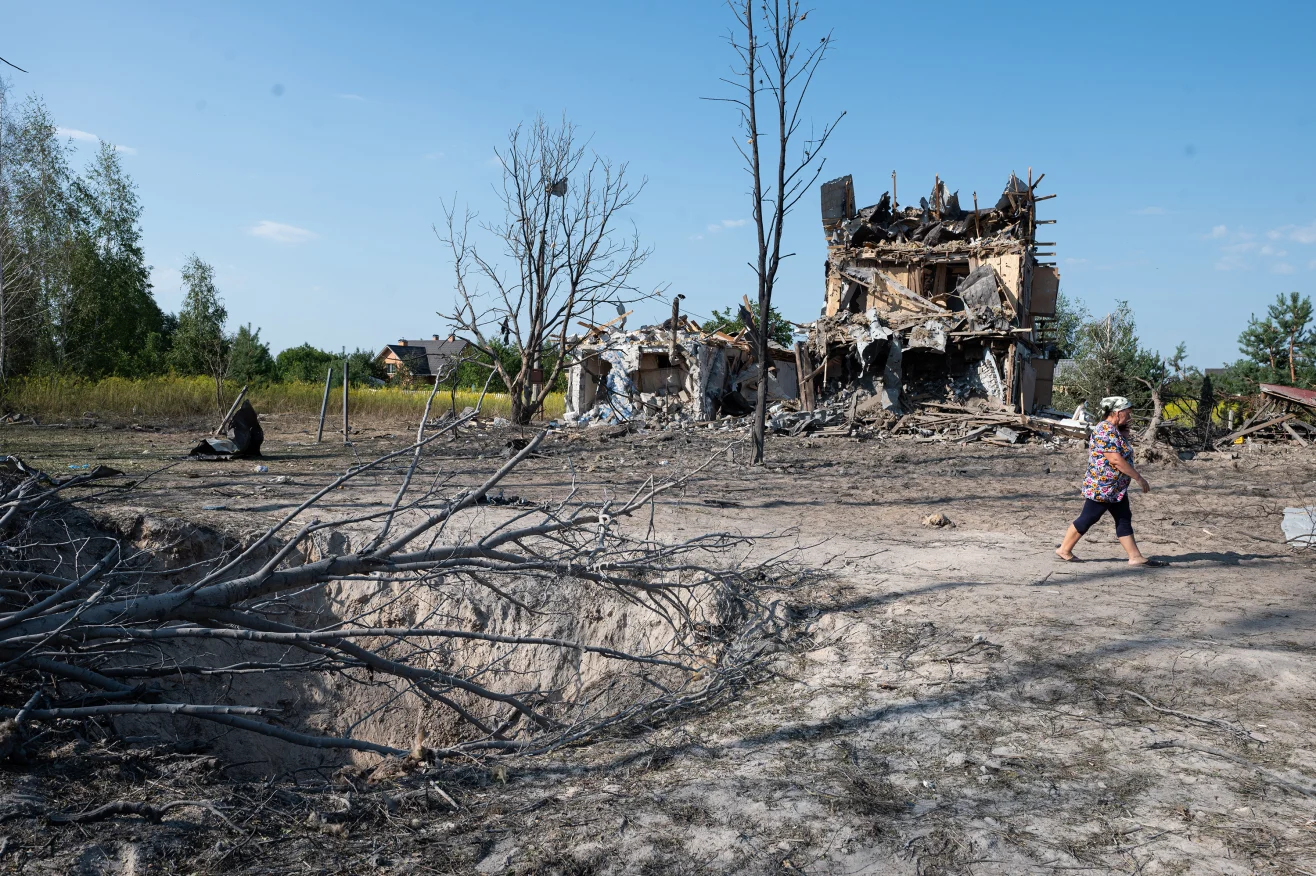
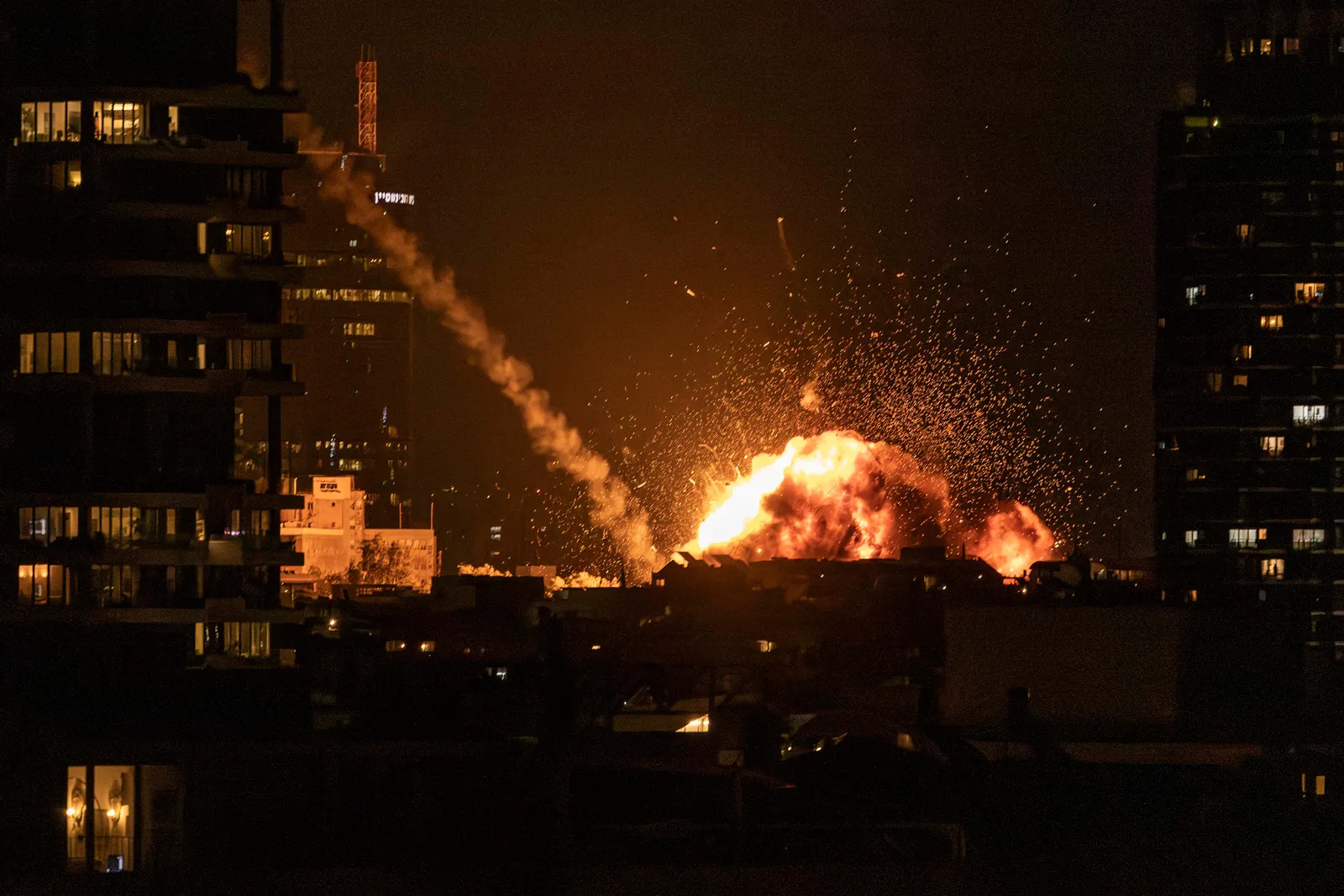
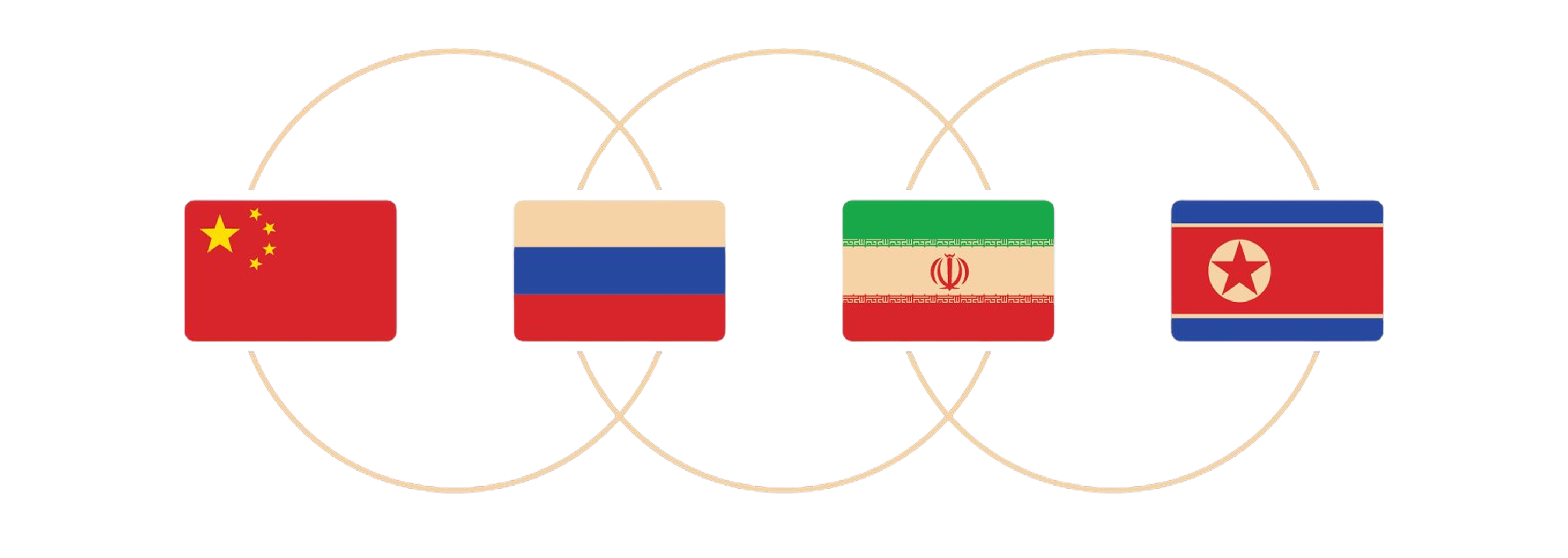
The United States is facing an Axis of Aggressors — Russia, China, Iran, North Korea. It’s not the first time that America has faced an Axis. In 1940, President Franklin D. Roosevelt warned of growing dangers from Germany, Japan, and Italy. It may not have been a message people wanted to hear, but it was the plain truth.

Franklin D. Roosevelt delivering a fireside chat, 1940

President Franklin D. Roosevelt, fireside chat, December 29, 1940, less than one year before the attack on Pearl Harbor.

“During the past week many people in all parts of the nation have told me what they wanted me to say tonight. Almost all of them expressed a courageous desire to hear the plain truth about the gravity of the situation. One telegram, however, expressed the attitude of the small minority who want to see no evil and hear no evil, even though they know in their hearts that evil exists… The gist of that telegram was: ‘Please, Mr. President, don’t frighten us by telling us the facts.’”

Tap anywhere for sound

FDD Visuals

AxisofAggressors

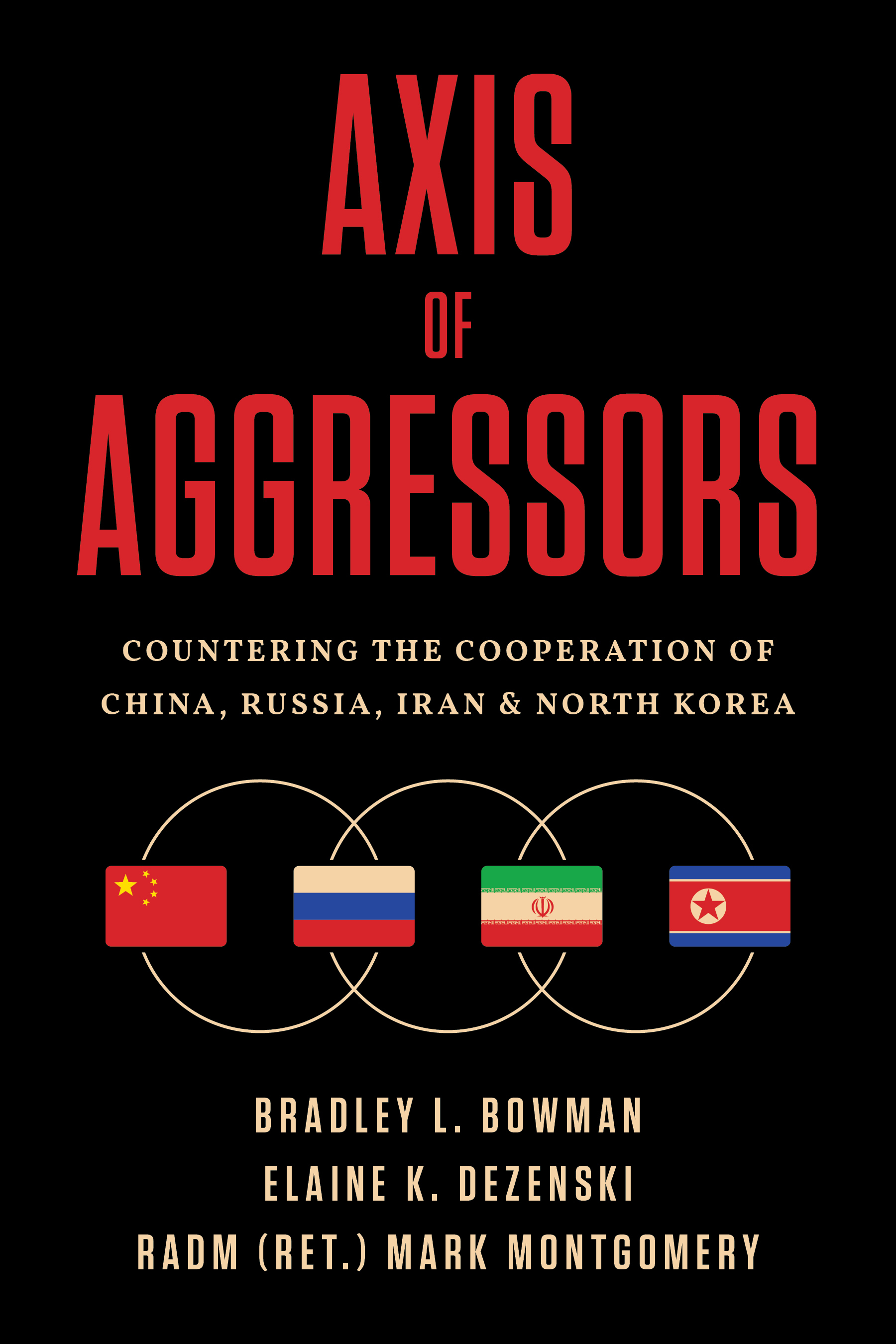
Axis of Aggressors book cover

What are the facts of the current situation?

The new book, Axis of Aggressors by Bradley L. Bowman, Elaine K. Dezenski, and Rear Admiral (Ret.) Mark Montgomery, delivers the most rigorous, comprehensive analysis to date of how America’s authoritarian adversaries are cooperating; why that cooperation matters; and how Americans should respond.

Quoted material below is taken from the book unless otherwise specified.

Increasing Axis Cooperation;
Eroding American Security

Researchers documented 616 incidents of Axis security cooperation from January 2019 to December 2025 across five categories: Weapons Development, Arms Transfers, Military Exercises & Deployments, Intelligence Sharing, and Military Exchanges.

Russia

North Korea

Iran

China

228 146 111 82 10 2
4
adversaries
6
bilateral relationships

Plus 37 multilateral events involving three or more Axis members.

The Bottom Line

Axis of Aggressors cooperation is multifaceted, growing, and increasingly consequential…

The Axis is not

  • —

    a comprehensive mutual defense treaty or a unified command structure

  • —

    a multilateral alliance like NATO

  • —

    monolithic

These Axis adversaries harbor

  • —

    some unique interests and divergent objectives

  • —

    significant distrust and compete with one another

  • —

    difficult bilateral histories

Nonetheless, Beijing, Moscow, Tehran, and Pyongyang are increasingly willing to set aside differences and cooperate around shared domestic and foreign policy goals. Those include a desire to control their populations, maintain their autocratic grips on power, facilitate aggression, and create an international system that accommodates their aggression and authoritarianism. Most concerningly for Americans, Axis members are united by a shared hostility toward the United States, its interests, and its allies and partners.

China

1/3

of China’s oil imports came from Russia and Iran in 2024

“This asymmetric trade relationship gives China significant leverage over its Axis partners, who are frequently relegated to the uncomfortable position of junior partner or even vassal state.”


Russia

80%+

of observed security cooperation among the Axis involves Moscow — the most of any Axis member, according to the dataset described in the book

“While China is the heart of Axis economic cooperation, Russia is the heart of Axis security cooperation.”

North Korea

10,000+

troops deployed to Russia in 2024 “to support combat operations in Kursk” — per the U.S. intelligence community — with more likely on the way

“Though Russia benefited from some additional manpower to reverse Ukraine’s advance in Kursk, the Korean People’s Army arguably benefited just as much from the opportunity to gain combat experience.”

Iran

Shahed-136

is the design that “became Russia’s long-range, one-way attack drone of choice,” and whose technology proliferated to the rest of the Axis

“Although unquestionably a junior partner within the Axis, Tehran has played an important role as both a patron and a beneficiary of security cooperation.”

The patron and beneficiary

Iran’s Role in Axis Drone Proliferation

How the Shahed-136 one-way attack drone and its descendants became the shared weapon system of the axis.

Arsenals armed 1 / 4
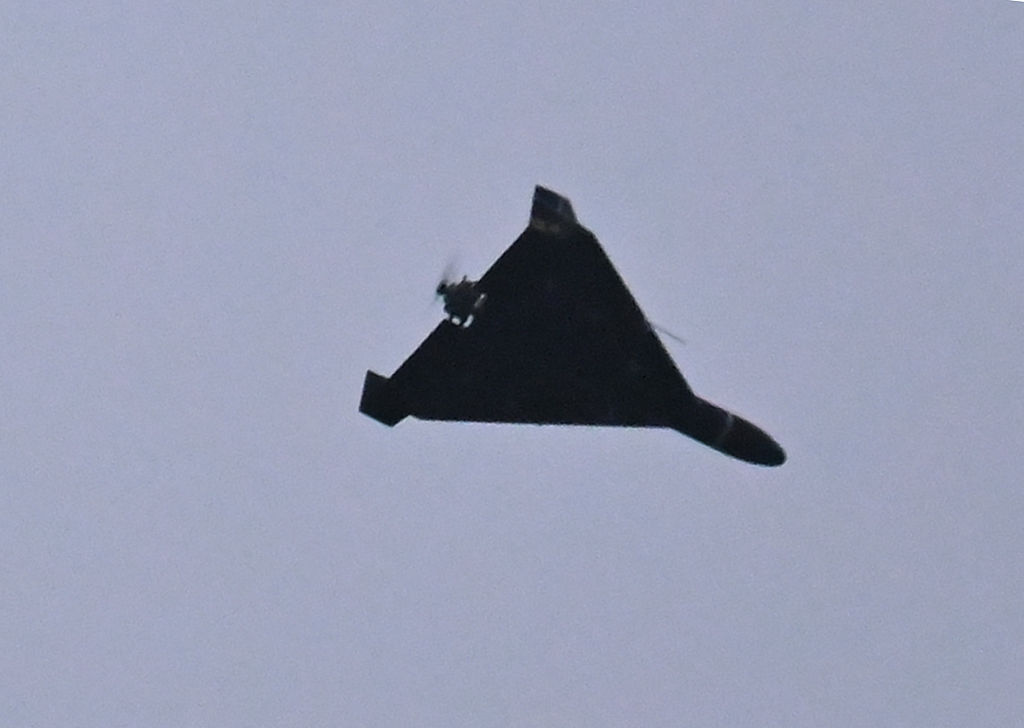
An Iranian-designed Shahed-136 drone in flight over Kyiv

An Iranian-designed Shahed-136 (Geran-2) drone used by the Russian army flies over Kyiv during a drone and missile attack, December 27, 2025. Photo by Sergei Supinsky/AFP via Getty Images.

Iran develops the Shahed-136

Iran develops an inexpensive, one-way attack drone capable of striking targets over 1,000 miles away.

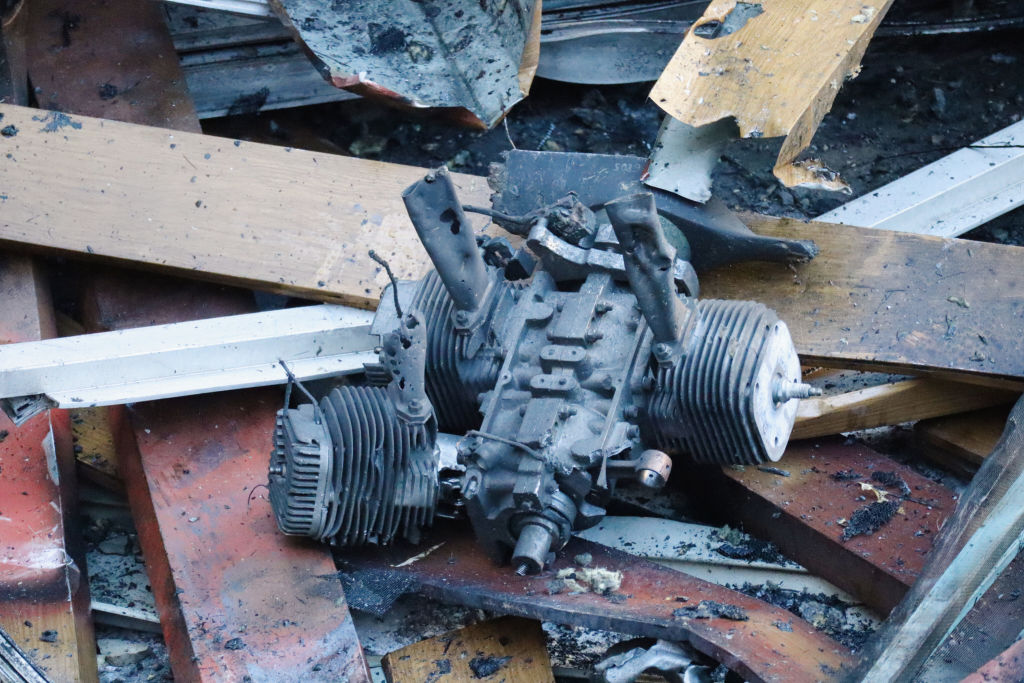
Engine of a Russian Shahed-136 (Geran-2) drone found after a strike in Kyiv

An engine of a Russian Shahed-136 (Geran-2) drone found at the site of a strike on a medical center in Kyiv, November 7, 2024. Photo by Andriy Zhyhaylo/Obozrevatel/Global Images Ukraine via Getty Images.

Iran transfers the design to Russia

Iran transfers Shahed-136s, as well as the design and production specifications to Russia.

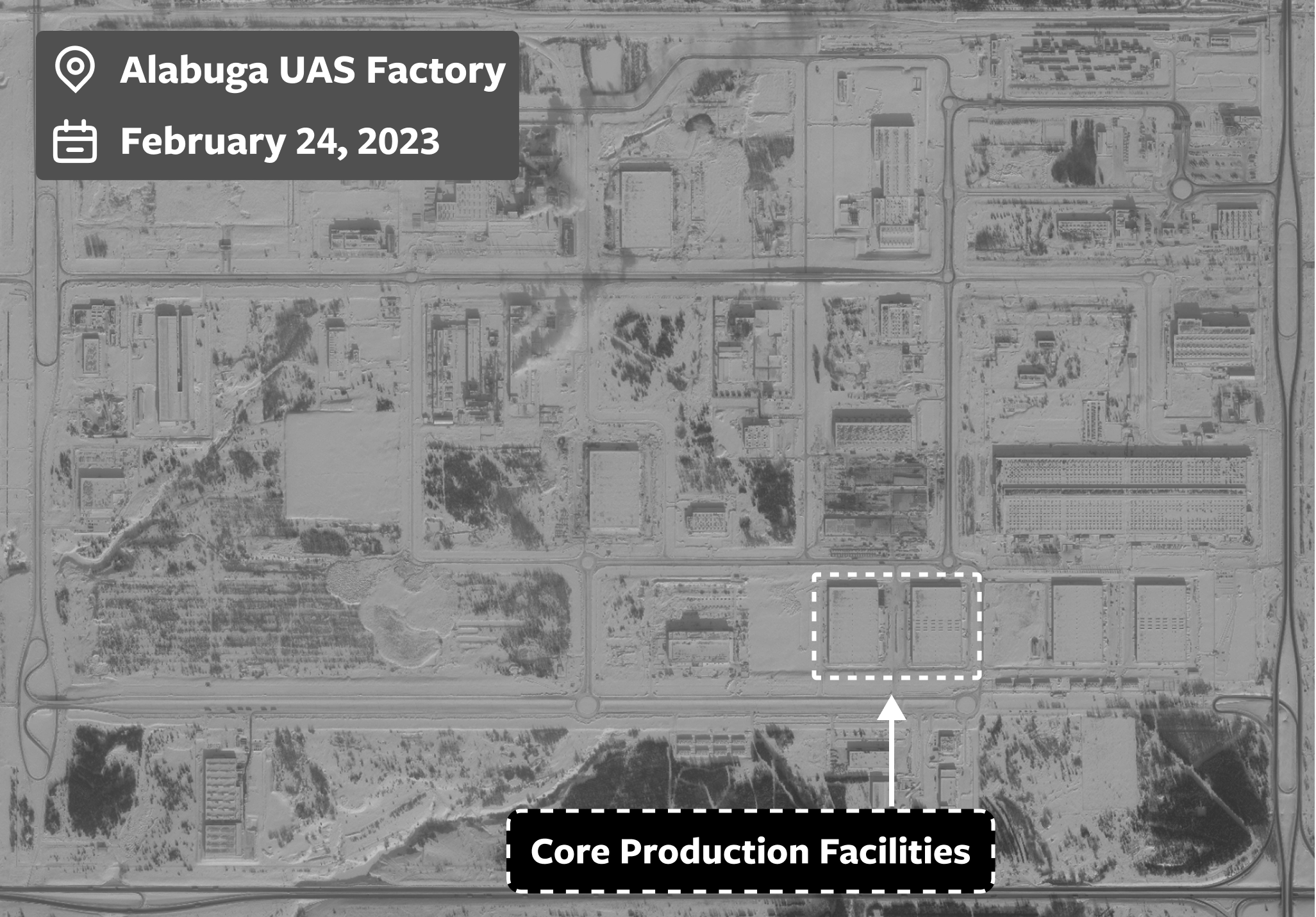
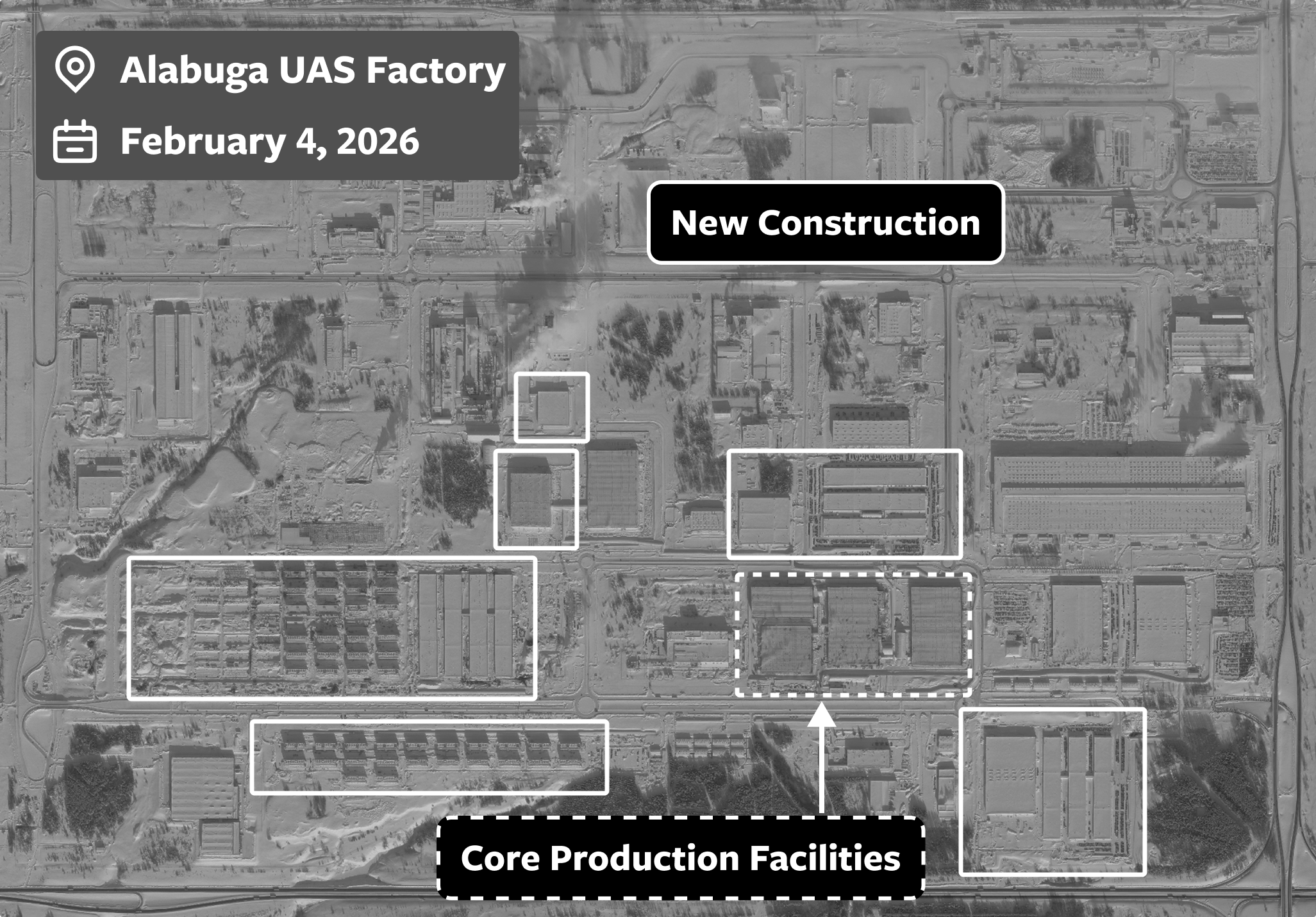
Alabuga special economic zone before Geran-2 drone production
Before
Alabuga special economic zone after Geran-2 drone production scaled up
After

Alabuga UAS Factory, February 24, 2023 and February 4, 2026. Copyright © 2026 by Vantor. Images may not be republished without permission.

Russia scales production at Alabuga

Russia produces thousands of Geran-2 (their version of the Shahed-136) at the Alabuga factory in Russia. The weapon that originated in Iran now sustains Russia’s air campaign.

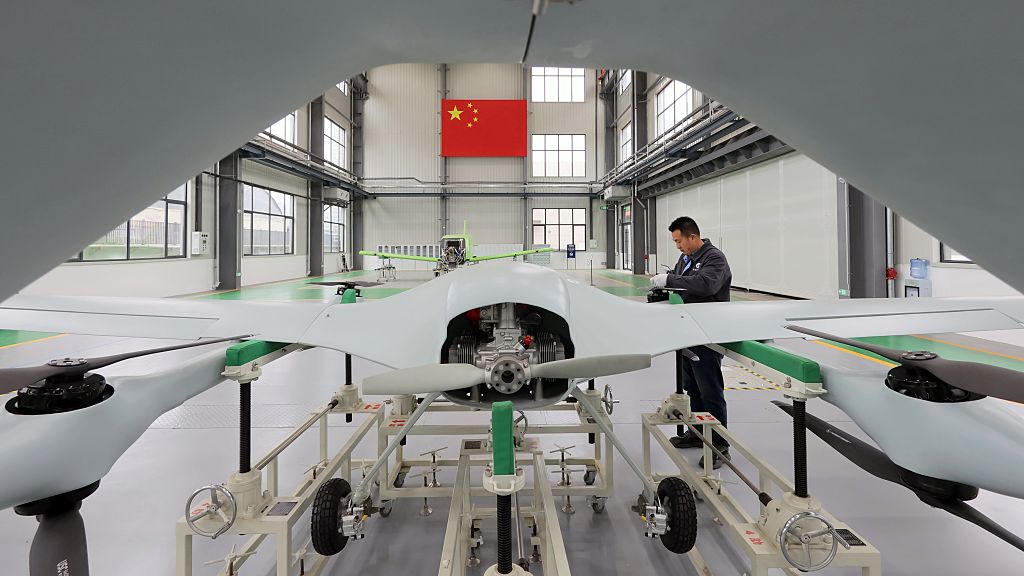
A worker inspects a drone in a Chinese factory

Photo via Getty Images.

China develops Shahed-136 variants

China supplies engines and other components for the Shahed-136 while developing similar models for the Chinese military.

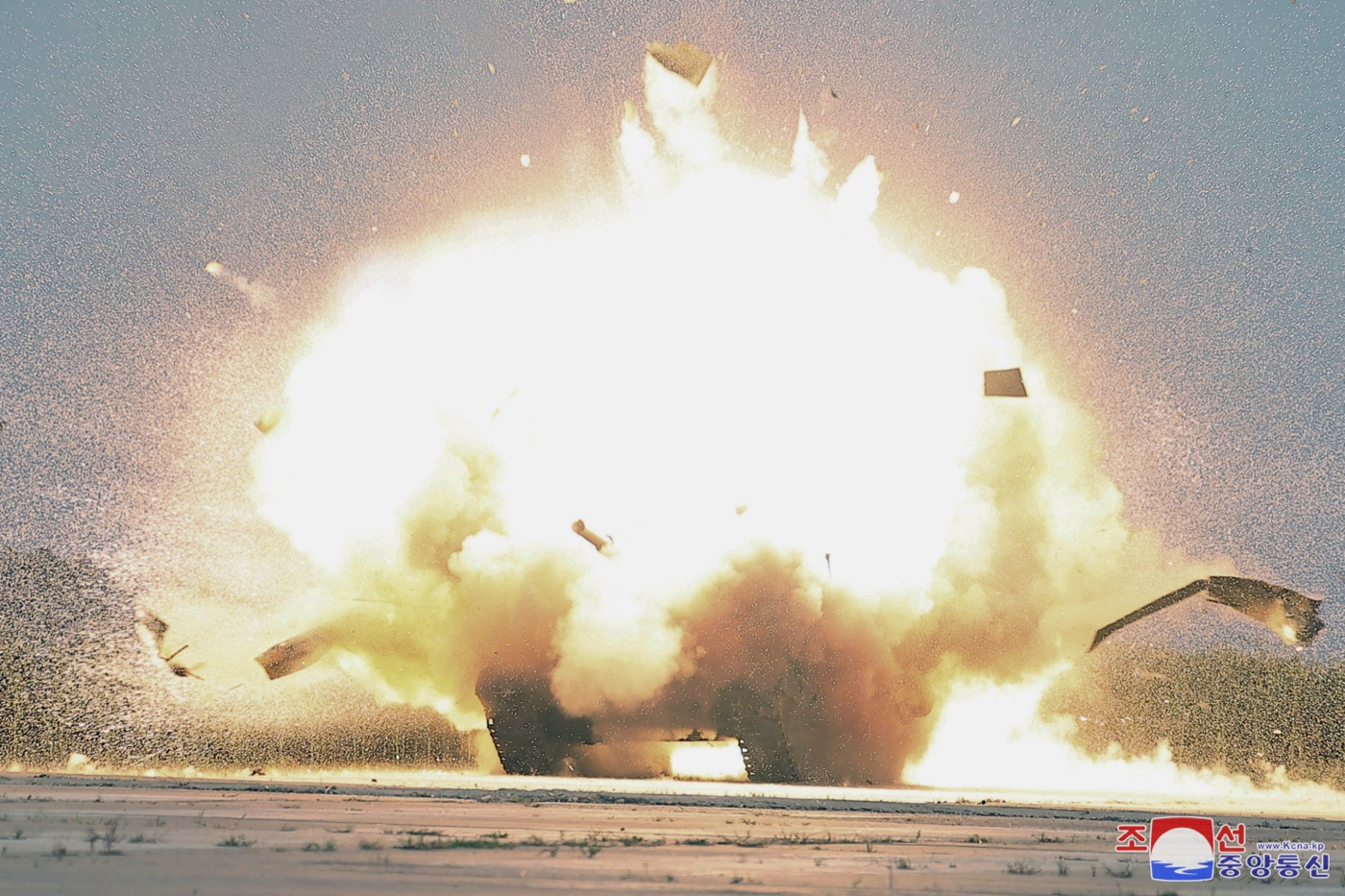
Explosion as a drone strikes a target during a North Korean demonstration

A claimed North Korean drone test. (Korean Central News Agency/Korea News Service via AP)

Russia shares drone production with North Korea

Russia begins transferring drone production technology to North Korea — completing the cascade. The DNA of one Iranian weapon now lives in all four Axis members’ arsenals.

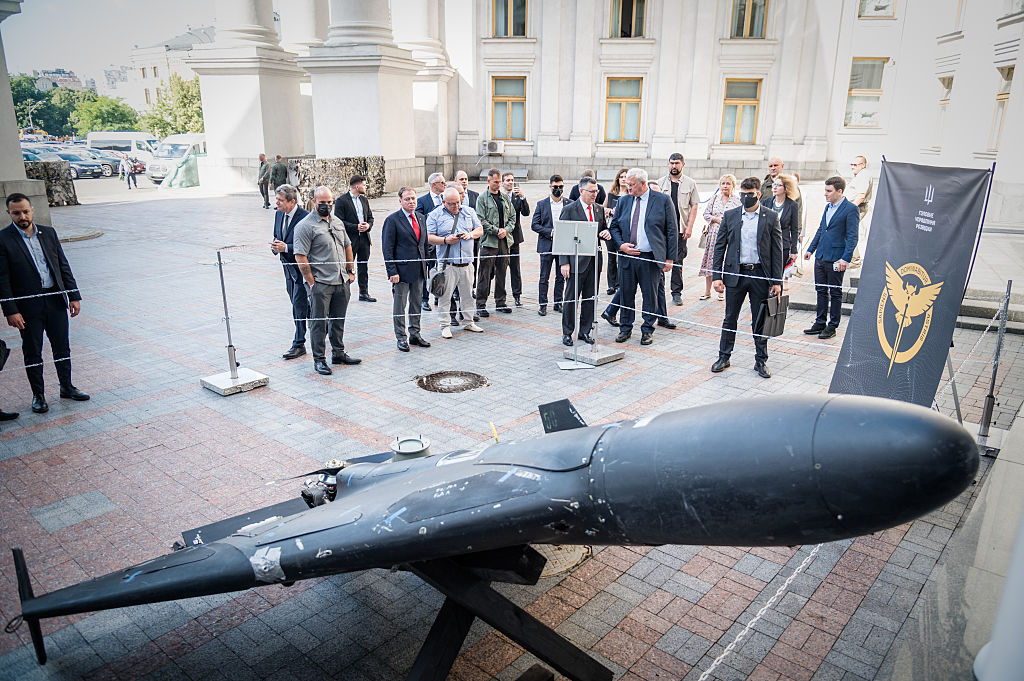
A Russian Shahed Geran-2 drone displayed outside the Ukrainian Foreign Ministry in Kyiv

A Russian Shahed (Geran-2) drone displayed outside the Ukrainian Foreign Ministry in Kyiv, July 23, 2025. Photo by Eduard Kryzhanivskyi/Ministry of Foreign Affairs of Ukraine/Global Images Ukraine via Getty Images.

Russia transfers improved Shahed-136s to Iran

During the U.S.-Iran conflict, Russia reportedly plans to send upgraded versions of the Shahed-136 to Iran, which would increase the lethality of the drones against U.S. forces.

The new axis

Multifaceted, Growing,
Increasingly Consequential

Economic

China’s factory-to-the-world economy runs on discounted energy from a sanctioned Russia and Iran — and its exports keep Moscow’s war machine supplied.

Power of alternative payment systems

Axis states are quietly building alternative payment systems, local-currency trade, and crypto channels designed to blunt U.S. sanctions power. Today these are small and fragile — but they are maturing.

Power of Siberia pipeline

A steady flow of Siberian gas to Shanghai — slated for 38 billion cubic meters a year, roughly 9 percent of China’s 2024 gas consumption.

Discounted sanctioned crude

Russia sells oil $2.50–$20 per barrel below market-set benchmark; Chinese buyers of sanctioned Russian crude may have saved $16 billion.

Cyber & Technology

The Axis trades the tools of digital control — firewalls, surveillance systems, and offensive cyber tradecraft.

Russia’s “Iron Curtain”

Russia brought in Chinese specialists to help build a domestic internet modeled on China’s own “Great Firewall,” through a series of hosted delegations.

Surveillance equipment exports to Iran

China supplied Iran video surveillance, drone cameras, and AI facial-recognition software; Iran is implementing a social credit system mirroring China’s.

Sharing exploits and zero-days

Tradecraft, exploits, and zero-days (flaws in software the creator doesn’t know about) are the most coveted aspects of offensive cyber operations — and the ones Axis members have begun to share.

Military

Arms, ammunition, and manpower move across the Axis.

North Korea fighting in Europe

Pyongyang sends millions of munitions and thousands of troops to fight in Europe to support Putin’s invasion.

China and Russia supporting Iran

Moscow and Beijing send Tehran information to target U.S. troops. Russia helps with drones, and China helps with missile precursors.

Fueling current and future war

China supports Putin’s defense industrial base, and Moscow helps Beijing with airborne operations, lessons learned from Ukraine, and potentially submarine quieting.

The response

What We Must Do

“While the cooperation between Axis members is strengthening in many ways, there are still weaknesses and fissures among them to exploit.” Below are key recommendations taken from the book Axis of Aggressors describing aspects of the grand strategy the United States should adopt to strengthen the United States, bolster allies and partners, and counter the Axis. For the comprehensive list of 58 recommendations, you may find the book here.

Economic Policy

  • The economic component of U.S. grand strategy should include both offensive and defensive elements. Development and employment of an interagency U.S. sanctions strategy that coordinates with allies and partners and enables preemptive, synchronized actions to deter and punish both Axis aggression and other actions that undermine American interests is key.
  • Offensive measures should seek to prevent the development of alternative Axis payment and financial messaging systems.
  • Offensive measures should also hamper sanctions evasion while working to disrupt the illicit oil economy and supply of dual-use goods to Russia, Iran, and North Korea.
  • Defensive measures will also be essential. To defend its economic security, the United States should focus on corporate transparency requirements to prevent our adversaries from using layers of shell corporations to operate inside the U.S. economy, enabling them to evade sanctions and acquire sensitive technology.
  • It is also imperative to secure U.S. and allied supply chains, with an emphasis on ally-shoring.

Cyber and Technology Policy

  • U.S. grand strategy must also include steps related to cyber, information warfare, totalitarian censorship and oppression, emerging technology, and the nuclear energy domain. Cyber measures should include actions to better protect U.S. critical infrastructure, create a U.S. Cyber Force, and empower allies and partners in the cyber domain.
  • When it comes to emerging technology, Washington must redouble efforts to stay ahead of China in the AI race and implement export controls that make it more difficult for Axis members to acquire cutting-edge technologies.
  • The United States must also go on the offensive in the information domain and counter Axis efforts to export totalitarian surveillance capabilities.
  • Finally, Washington should implement a comprehensive effort to penalize any Chinese or Russian support for the Iranian or North Korean nuclear programs and strengthen U.S. and allied nuclear energy supply chains and next-generation technologies.

Military Policy

  • First, the administration and Congress should ensure that they properly fund and equip the U.S. military so that it remains capable of deterring and defeating threats from the Axis. That will require dramatically increased defense spending and updated military requirements that reflect both growing threats and the near-term prospect that the U.S. military could confront simultaneous wars in different theaters.
  • Second, the United States must also take additional steps to reinvigorate its defense industrial base to increase America’s overall military capacity and deliver large quantities of weapons and munitions more quickly to U.S. forces.
  • Third, Washington must bolster American deterrence, both at home and in key regions vital to American interests. That requires a fully modernized strategic nuclear deterrent and substantial improvements in homeland missile defense. It also requires retaining a robust and capable U.S. military force posture in Europe, Asia, and the Middle East.
  • Fourth, the United States must empower its allies and partners to deter and weaken the Axis. That will require providing robust military assistance to beleaguered democracies, including Taiwan, Ukraine, and Israel. Washington should also initiate systematic efforts to collect, understand, and disseminate hard-won combat lessons learned by Ukraine and Israel, sharing them with U.S. forces, as well as with other allies and partners, such as Taiwan and South Korea.
  • Finally, Washington must better track, deter, and disrupt Axis security cooperation. That necessitates updated and new congressional reporting requirements to ensure the American public and policymakers understand evolving Axis threats. It also requires identifying the areas of current or potential Axis security cooperation that most threaten American security and devising ways to deter and disrupt them.

To Learn More

Purchase

In his fireside address on December 29, 1940, President Roosevelt spoke to an anxious nation. He warned Americans that “never before since Jamestown and Plymouth Rock has our American civilization been in such danger as now.” In 1940, Americans confronted a choice. One year later, that choice was made for them, when the attack at Pearl Harbor rid Americans of the illusion that they could ignore accumulating threats abroad. Today’s threats are different, yet significant and growing. Regardless, the future may depend on the degree to which Americans take the Axis of Aggressors seriously — and act accordingly.

Based on Axis of Aggressors by Bradley L. Bowman, Elaine K. Dezenski, and Rear Admiral (Ret.) Mark Montgomery.

Produced by Pavak Patel. Edited by Jason Fields. Creative design by Daniel Ackerman.